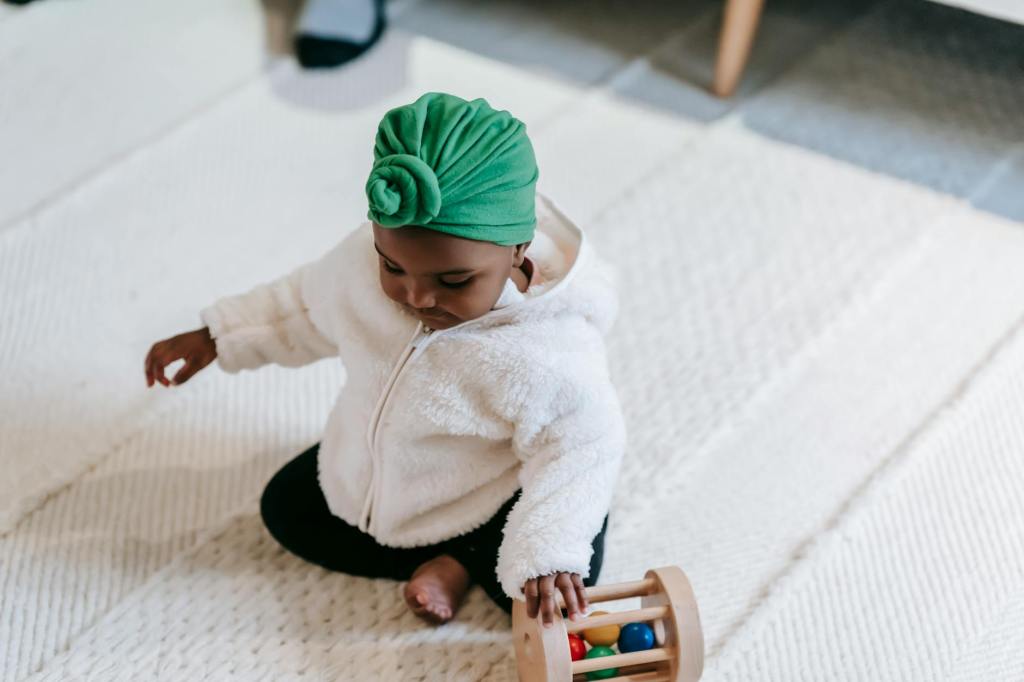
When we think about racially inclusive practices, babies can often be overlooked. Their perceived innocence and distance from societal complexities can lead us to believe that these conversations around can wait until they’re older. However, this perspective is misinformed and misses the profound impact that those early experiences have on shaping children’s understanding of the world.
I’ll admit, during my early practitioner days, this would have been my perception, in fact, I didn’t see the baby room as a space where much needed to happen besides sleeping, feeding and nappy changing! Because of this I wasn’t particularly interested in working with babies, but thankfully my leader who saw the bigger picture encouraged me to take the leap into the brilliant world of the baby room. What followed was a transformative journey, which reshaped my perspective, and I now advocate passionately for babies and the quality breadth of experiences they deserve.
Research aligns with what I came to see firsthand: babies are competent learners with immense potential. Studies like those from the First 1001 Days Movement emphasise how critical these early years are for brain development. Babies thrive on meaningful input from caregivers—every interaction, experience, and moment shapes how they see the world. but how often do we stop and think about what this means when it comes to race and representation?
Why Does Race and Representation Matter for Babies?
If babies are capable of absorbing positive messages, it stands to reason that they can just as easily take in negative ones. Research shows that by three months of age, babies already show a preference for faces of the same race as their primary caregivers—a result of frequency of exposure rather than inherent bias (Quinn et al., 2002). By the age of two, they start using race to interpret behaviour and even develop biases about who they play with (Van Ausdale & Feagin, 2001).
These findings highlight the importance of addressing representation early. Waiting until they are toddlers or preschoolers misses a crucial window to shape how children perceive and relate to others. Early experiences lay the groundwork for inclusive attitudes and respectful relationships that influence their social interactions for years to come.
Representation matters not just for fostering inclusivity but also for affirming identity. Imagine being a baby in a setting where no one looks like your family, and your cultural background is absent from the environment. These subtle exclusions can affect how children start to see themselves and others. As Derman-Sparks and Edwards (2010) point out, exposing young children to diverse cultural representations fosters both inclusivity and a sense of belonging.
How Can Babies Learn About Diversity?
Babies absorb everything around them. While having a diverse group of staff and families is ideal, of course it’s not always possible. However, practitioners can take other thoughtful and intentional steps.
The first step is reflection. Every setting and cohort is unique, so any changes should align with the specific needs and circumstances of the children and families you work with alongside your ethos, vision and values. The following are examples of questions that might assist your reflection:
– How well does our environment celebrate each baby’s culture, heritage, and family background?
– Are there gaps? Do some babies and families feel more represented than others?
– Who can we consult for advice? Families, colleagues, or diversity experts can offer valuable insights. (Remember, diversifying your setting requires the team to embrace ongoing learning.)
– What changes or additions can we make to create a more inclusive space? Are there toys, books, or displays we could update to better reflect all the children?
By asking the right questions and engaging in honest self-reflection, practitioners can create an environment that authentically represents the children in their care and the wider world.
Suggestions to Promote Racial Representation in the Baby Room
Images: Display family photos where babies can interact with them, fostering a sense of belonging from seeing their own families while exposing them to the diversity of each other’s families. Audit the visuals in your room and see where you can add those that showcase a range of racial and cultural identities, especially if your cohort lacks this.
Books: Invest in diverse, high-quality books that feature characters and stories from various backgrounds. Make them an integral part of your library and core books to encourage inclusivity. Check out The best inclusive children’s books, all in one place | IBC for some ideas.
Parent Engagement: Work with families to gather insights and materials that reflect their cultures and traditions. This collaboration should complement your own proactive efforts, not replace them. I usually find parents are more open if they can see that you’re committed and taking initiative. Build on existing practices, like diversifying your lending library and consider the information you send out. Does it show parents that representation matters in your setting?
Outings: Use local resources to expose babies to diversity, whether it’s through a walk in the community, visiting local events, or exploring multicultural businesses. These outings create valuable opportunities to showcase the world beyond the setting.
Role Play: As babies start engaging in role play, ensure props and materials reflect diverse racial and cultural identities. Representation in imaginative play helps normalise diversity from a young age.
Wider Setting: My baby room was always less diverse than the wider setting, if this is the same for you, think about how the wider setting can support representation. Engage with other rooms or staff to create opportunities for babies to experience diversity. When planning for this, consider the individual baby and how you will provide these experiences in ways that respect their need for consistency, safety and familiarity.
By embedding these strategies into daily practice, racial representation becomes a natural and meaningful part of the baby room environment. Small intentional changes can make a big difference.
Measuring the Impact
Impact is such an important part of our work, and for many of us, it’s a big motivator. However, we have to be okay with the fact that the impact of these changes might not always be immediately visible. Babies can’t articulate their feelings about diversity, but research supports the long-term benefits. Trust the process, even if the results aren’t immediately clear, you are laying essential foundations for their future relationships and attitudes.
Conclusion
Working with babies is both a privilege and a responsibility. Supporting their early attitudes toward cultural diversity by reflecting on our practices and committing to inclusive values where all babies feel represented, valued, and supported, should be an integral part of our practice.
Representation matters because it shapes the stories babies absorb about themselves and others. It’s about making sure that diversity isn’t just a nice idea but something that’s part of everyday life in the setting.
References
– Van Ausdale, D. J., & Feagin, J. R. (2001). *The First R: How Children Learn Race and Racism.*
– Quinn, P. C., Kelly, D. J., Lee, K., Pascalis, O., & Slater, A. M. (2002). *Preference for Own-Race Faces by Infants: A Developmental Study.* Psychological Science.
– First 1001 Days Movement. (2021). *The Importance of the First 1001 Days: A Period of Opportunity.*
– Derman-Sparks, L., & Edwards, J. O. (2010). *Anti-Bias Education for Young Children and Ourselves.* National Association for the Education of Young Children (NAEYC).
 EDI Spotlight
Leave a comment