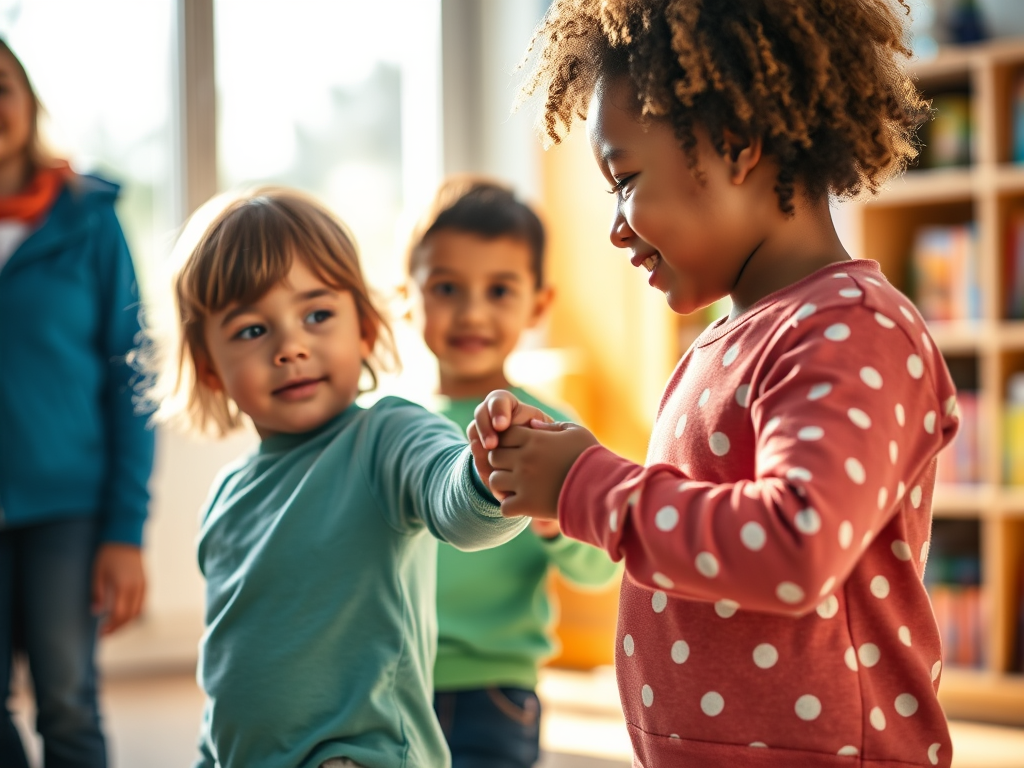
Tolerance vs. Acceptance: Why the Distinction Matters
A key distinction to explore when reflecting on inclusive practice is the difference between tolerance and acceptance. These are concepts that may seem similar but have profoundly different impacts on our attitudes toward children and families, and the relationships we build with them.
What is Tolerance?
Tolerance is a surface-level approach to diversity. It involves allowing others to exist alongside us even if their views, behaviours, or identities don’t align with our own. While it can prevent overt exclusion, it often lacks genuine interest or warmth. Tolerance doesn’t foster connection or belonging for children and families because it stops short of engaging with the core of who they really are. It feels more like enduring their differences rather than truly appreciating them.
What Tolerance Might Look Like in Practice
Ignoring Differences and Individuality: For example, adopting a “colourblind” approach that avoids acknowledging diversity. This could stem from a lack of curiosity about differences or the assumption that surface-level similarities, like speaking the same language, or celebrating the same festivals are “good enough” so you don’t dig deeper.
Assimilation: Encouraging children and families to just “fit in” with your way of doing things without adapting to them or allowing their voices to influence your practice. This approach may assume that their choice to join your community implies a willingness to abandon their own cultural practices. It can also reinforce an underlying power dynamic where your culture or way of doing things is viewed as superior.
Majority Dominance: If only a few children in your group are from diverse backgrounds, you might feel the effort isn’t warranted.
Emotional Distance: Relationships with particular families might be polite but lack depth. You may make less effort to connect deeply because you feel their differences make genuine rapport difficult or even impossible.
Internalised Perceptions: You may find ways to accommodate diversity when forced to (e.g., translating for an EAL child or family), but you do the bare minimum to get by because internally, it feels like a burden.
Co–existence: Encouraging children to all be friends and co-exist without teaching them about difference.
What is Acceptance?
Acceptance goes far beyond tolerance. It’s about actively valuing differences and recognising that they enrich early years settings. In an accepting environment, everyone feels seen, respected, and celebrated for who they truly are.
What Acceptance Might Look Like in Practice
Curiosity and Openness: Actively asking questions, engaging in conversations, and showing genuine interest in others’ experiences, ways of life, and personal histories. It also means moving past the fear of getting it wrong or appearing intrusive. A turning point for me was recognising that I would rather my families feel I am overzealous and ask too many questions than feel that I don’t care enough to make the effort to truly include them, although of course the aim is to achieve balance.
Active Inclusion: Making every child and family feel they belong, not just physically, but emotionally and socially, by giving them a voice and space to be heard. Evaluating your approach and trying new strategies if it doesn’t work rather than giving up.
Empathy and Understanding: Encouraging children to see the world through each other’s eyes, supporting deeper connections.
Recognising the Unique Child: Highlighting what makes each child and family unique and encouraging appreciation and celebration of these qualities, not just on specific occasions, but as an ongoing part of your practice.
Building Relationships: Striving to create warm, authentic connections with every child and family, even when it feels difficult. processes include ongoing reflection and confronting any personal biases that may be hindering these relationships.
Experimenting and Adapting: Continuously adjusting your approach to meet the unique needs of the diverse children and families in your setting, showing an understanding that these needs change as your cohort changes each year.
Walking into a Room of Tolerance
Walking into a room of tolerance means that people see you, but they don’t see you. You have a voice but it’s a very quiet one that struggles to be heard amongst an underlying hum of indifference. It’s as though there’s an invisible line drawn around you; you’re allowed to exist within the space, but you’re not truly invited to be part of it. Your unique qualities, stories, and experiences remain on the periphery, unexplored. You shrink a little to fit in, in response to the subtle message: We’ll accept you, as long as you don’t make us work too hard to understand you.
I recall attending a workshop where the trainer introduced herself with a culturally significant name. After a few awkward mispronunciations and several participants avoiding using her name altogether, she offered a shortened version to make it “easier” for everyone. I could sense the room’s collective relief, but I couldn’t help but wonder: How much of her identity has she had to compromise for this room—and for others? This small example illustrates how a tolerant environment often shifts the burden of adaptation onto the individual rather than the group.
Walking into a Room of Acceptance
Walking into a room of acceptance feels like being truly seen. It’s a space where your presence isn’t just tolerated, it’s celebrated. You don’t have to hide parts of yourself or work hard to fit in. Instead, you feel welcomed exactly as you are, with all your uniqueness embraced. In an accepting room, there’s an energy of curiosity and connection. People don’t avoid your differences; they engage with them respectfully and enthusiastically. If you share your story, they listen with genuine interest. If you teach them your name, they make the effort to say it correctly, not out of obligation, but because they want to.
It’s a place where you feel comfortable letting your voice be heard because you know it matters. you’re contributing to a space where everyone’s individuality enriches the group. Acceptance feels like belonging, and in that environment, you’re free to thrive.
Have you ever considered whether your room feels accepting or tolerating when your children and families walk in?
What Might Influence Tolerant Attitudes?
Societal Norms and Legal Frameworks: Equality legislation often emphasises tolerance by addressing overt discrimination, ensuring basic fairness without necessarily promoting deeper inclusion (UNESCO, 2023). This focus on “not excluding” sets a low bar, sending the message that tolerance is sufficient.
Cultural Conditioning: Historically, dominant cultures have encouraged assimilation, expecting individuals from minority groups to conform to the norms of the majority, often creating an unspoken hierarchy. Phrases like “We’re all the same deep down” ,though often well-meaning, diminish the richness of diversity. This mindset can discourage acknowledging differences, driven by a fear that this creates division (Gay, 2018).
Fear of Discomfort or Conflict: Engaging with diversity requires vulnerability—asking questions, making mistakes, and confronting biases. For some, this feels daunting, leading them to settle for tolerance, which avoids deeper, potentially uncomfortable interactions. For instance, I often identify myself in conversation as a Black woman but have encountered many who struggle with discomfort and hesitate to use those words or explore the parts of me that are different to them further, even with ‘permission.’
Historical Trauma: For people from marginalised groups, tolerance might still feel like progress compared to past experiences of exclusion. I still experience older generations congratulate me on just having a place in a sector where minority groups remain underrepresented. For them, this is huge progress from when we weren’t protected by discrimination laws, however this type of thinking reinforces the notion that tolerance is “enough,” perpetuating low expectations for truly equitable and inclusive relationships (Jones et al., 2021).
Over-Reliance on Marginalised Individuals: The burden of adaptation often falls on those being “tolerated,” creating an unfair expectation for them to educate others, advocate for themselves, lead diversity initiatives, or just fit in. This dynamic perpetuates a power imbalance and limits the breadth of majority learning, reinforcing tolerance over acceptance.
The Impact of Tolerance on Children
Feeling “Othered”: Children may sense they’re accepted only superficially, leading to feelings of exclusion or isolation. For our youngest children it’s a feeling they might not be able to describe but it can manifest in subtle ways, such as being overlooked or struggling to connect with staff or peers.
Confusion About Identity: Without strong connections between home and school, children may struggle to reconcile their identities. Research shows that positive links between children’s home culture and their educational setting are essential for cognitive and emotional development (Educational Psychology Review, 2021).
Suppression of Identity: Children might feel pressure to hide aspects of their culture, language, or personality to fit in, or because they know you don’t understand, this can stunt their sense of self-worth.
Missed Opportunities for All: Children in the majority group miss the chance to learn about and appreciate diversity, fostering indifference rather than understanding. This can perpetuate stereotypes and biases.
Emotional Disconnect: A tolerant approach might create an environment where children feel safe but not truly seen, limiting their sense of belonging and trust in the community.
The Impact of Acceptance on Children
Belonging: Children feel valued and connected, fostering emotional security. Children thrive when they feel emotionally safe.
Foundations for learning: Acceptance creates an environment where children are free and safe to express themselves. This safety allows them to explore their identities, try new things, and take risks—all of which are essential for learning and development.
Confidence: Being celebrated for their uniqueness boosts self-esteem and encourages self-expression, particularly for marginalized children (Gay, 2018).
Empathy and Understanding: Exposure to diverse perspectives fosters compassion and helps children build deeper relationships with peers.
Enhanced Learning: Environments centred on acceptance promote collaboration, creativity, and mutual respect, leading to stronger academic and social outcomes (UNESCO, 2023).
Positive Role Models: When children see their identities reflected and celebrated, it reinforces their understanding of the value they bring to their communities.
How to Teach Acceptance
Acceptance isn’t just a mindset, it’s something we need to teach children. As educators we can foster acceptance by:
Modelling Respectful Behaviour: Remember children watch and learn from the adults around them. Show, curiosity, and respect for diversity in your team, families, children and community wherever possible. Go beyond what’s on the surface.
Encouraging Questions: Create a safe space where children can ask questions about differences. Answer honestly and in an age-appropriate way. Be curious alongside them and ask your own questions. If you are not sure ‘wonder’ with them and find out together.
Involve Parents: Not just to consult with them about a festival or event but showing true value to their perspectives by incorporating them into your curriculum as an ongoing strategy.
Enabling Environments: If children and families see themselves truly represented in your environment, it plays a significant role them feeling acceptance when they walk into the room.
Conclusion: Moving Forward- Choosing Acceptance
It’s easy to start with tolerance, especially when much of the world still steers us in that direction. However, there are many compelling reasons to shift from tolerance to acceptance, though this requires effort, vulnerability, and commitment. Educators have the power to lead this change by creating environments where diversity is celebrated, and every individual feels they truly belong. Teaching acceptance in the early years isn’t just about creating harmonious spaces, it’s about preparing children for a diverse world. By moving beyond tolerance to acceptance, we equip children with confidence in who they are and give them the tools to navigate life with kindness, respect, and an open heart. As Fred Rogers said, “As human beings, our job in life is to help people realize how rare and valuable each one of us really is.” We have the opportunity to make that a reality for our youngest learners.
References
- Jones, A., Smith, L., & Patel, R. (2021). “The Impact of Inclusive Pedagogy on Children’s Social and Emotional Development.” Educational Psychology Review.
- UNESCO. (2023). Global Perspectives on Inclusive Education: Challenges and Opportunities.
- Gay, G. (2018). Culturally Responsive Teaching: Theory, Research, and Practice.
- Rogers, F. (1994). The World According to Mister Rogers: Important Things to Remember.
 EDI Spotlight
Leave a comment