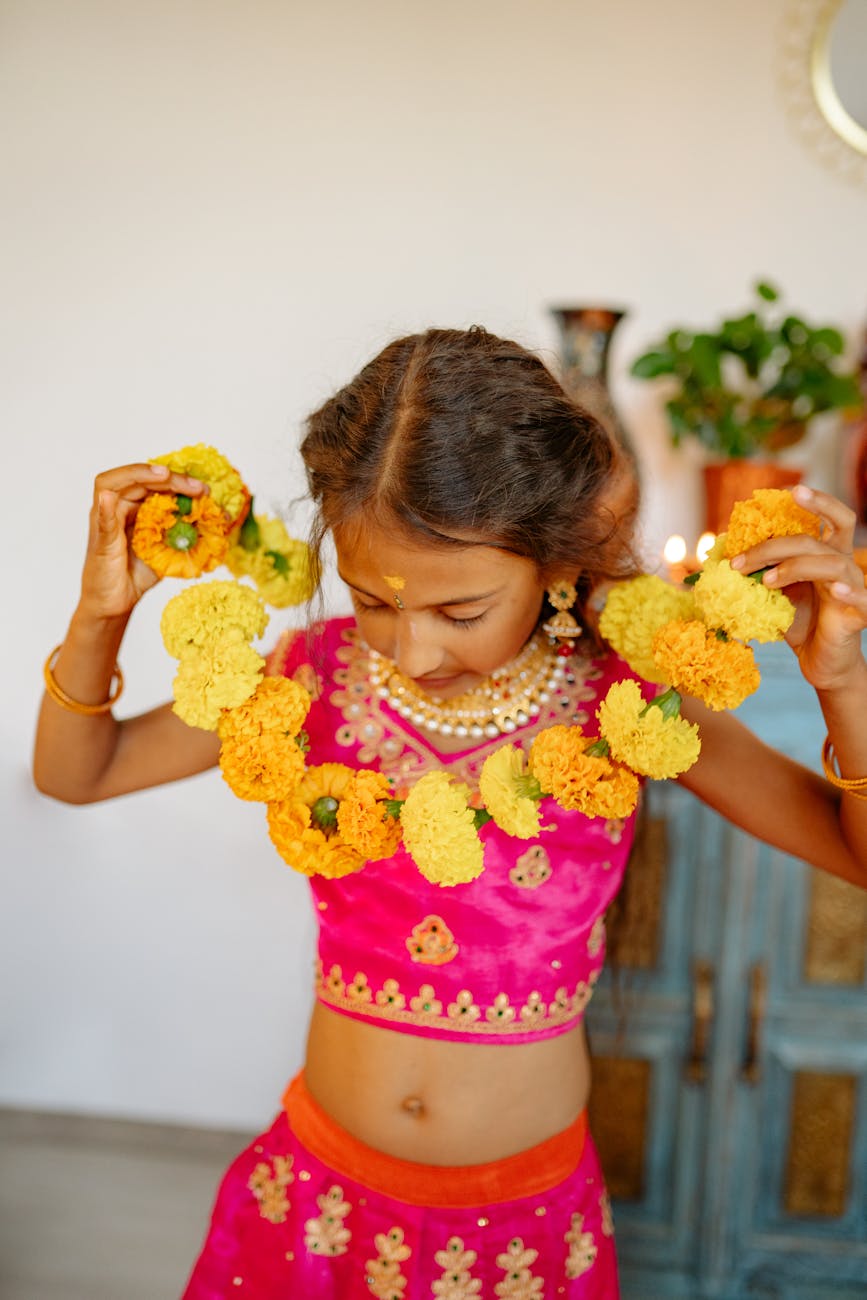
Rethinking Cultural Dress Role Play in Early Years
In early years settings, efforts to celebrate diversity often include using clothing from different cultures in role-play areas. The intention is usually positive—encouraging children’s curiosity and appreciation of cultures beyond their own or representing those in the cohort and the wider world. However, when you dig deeper, cultural dress is often reduced to a costume and it’s significance is lost.
With this in mind I encourage early years professionals to rethink and pose important questions: Are we fostering meaningful engagement, or are we unintentionally reinforcing stereotypes and cultural appropriation? Is it time to rethink the way traditional clothes from other cultures are used?
Intention vs. Impact
A key consideration is the distinction between intention and impact. Without this awareness, it becomes difficult to objectively assess our practice. Early years educators may introduce cultural attire into role play with good intentions, but that doesn’t guarantee a positive outcome. It’s common to focus on intentions and assume long-standing practices are effective—“We’ve done this for years, and it’s always well received.” However, this mindset can hinder critical reflection. For practice to evolve meaningfully, it’s essential to pause and assess its true impact. Boutte et al. (2011) highlight the importance of educators actively counteracting stereotypes rather than unintentionally reinforcing them. To do so we need to move beyond well-meaning gestures and create truly respectful and enriching experiences.
Appropriation vs. Appreciation
A common pitfall of incorporating cultural dress into role play is cultural appropriation—when elements of a culture, particularly from marginalised groups, are used without understanding or respect for their significance. Without meaningful context, cultural attire can become a costume rather than a representation of identity, reducing rich traditions to something that can be worn and discarded. Instead of fostering appreciation, this can reinforce children’s perceptions of “otherness.” Derman-Sparks & Edwards (2010) suggest that failing to consider this impact may lead to exoticized portrayals rather than a genuine understanding of cultural diversity.
Children’s Biases and the Reality of Role Play
We also need to keep in mind what we know about how children form biases from an early age (Winkler, 2009), this can influence how they engage with cultural clothing similarly to how it does the way they interact with people so it’s important to be intentional about guiding their learning. Where there are obvious issues with bias and prejudice, we can address this in real-time, however, as we know some attitudes and beliefs may be subtle or underlying making them much harder to identify and address.
Although specific research on role play attitudes with cultural clothes is limited, we can consider where it may have similarities to other research. For example, studies on gender stereotypes in play (Weisgram, Fulcher, & Dinella, 2014) suggest that role play can reinforce social biases rather than challenging them. Similarly, when engaging with cultural attire, we can consider that children may rely on existing biases rather than connecting the experience to a deeper understanding of others.
Young children are competent learners, but if we as adults struggle with unconscious biases and cultural appreciation, we cannot expect children to automatically engage with cultural dress in a respectful and informed way without thoughtful guidance.
The Perspective of Children from Represented Cultures
Beyond the impact on children engaging in role play, we must also consider how this practice may negatively affect those from the cultures being represented. Seeing their cultural attire treated casually, without understanding its meaning, can be alienating or even distressing (Boutte et al., 2011). Additionally, we must acknowledge the historical and social context surrounding cultural dress. For some communities, traditional clothing has been a source of exclusion or prejudice. How does it feel for children and families to see this attire used in role play without respect for its significance?
But Parents Are Okay with it…
A common response to this discussion is, ‘The parents haven’t said anything—they actually encourage it.’ While family engagement is important, it shouldn’t be the sole measure of whether a practice is appropriate. This brings us back to the intention vs. impact discussion. Parents may focus on the educator’s good intentions rather than critically analysing the impact. Furthermore, some parents may not feel comfortable challenging an educator’s approach, choosing to comply out of respect and trust or the belief that professionals must know better. Rather than seeking parental approval, settings need to shift the focus from passive inclusion to active engagement by building equal and authentic partnerships with parents.
Avoiding Appropriation and Working Towards Appreciation
- Involve families and communities: Work closely with families and community members from represented cultures to gain a deeper understanding. Where possible, invite them to share their experiences or learn how they would like key aspects of their culture to be introduced. This should be an ongoing commitment, starting as early as possible. However, remember that the views of one or two individuals do not represent an entire culture, so aim to consult as widely as possible.
- Context matters: Introduce cultural clothing within meaningful learning experiences. Ideally, this should be done by someone from the represented culture, but it can still be meaningful if this is not available to you, for example when paired with a story and followed by a discussion. This approach is far more enriching than using it as a standalone or child-led dressing-up activity. Remember, children learn best from repeated experiences, so don’t assume that a single event, such as a festival, will be enough.
- Engage children in discussions: Explain the cultural significance and history behind the clothing, using stories, images, and real-life examples. This is particularly important for children with little or no exposure to these cultures. They need it to be ‘brought to life’ as much as possible to understand it’s more than a fun activity.
- Monitor children’s interactions: Observe how children engage with cultural attire and be ready to provide guidance and role modelling. Ensuring respectful and informed engagement requires active facilitation rather than passive observation.
- Prioritise representation in other ways: Dressing up should not be the primary focus for exploring cultures. Auditing your environment to ensure cultural diversity is reflected throughout the setting and curriculum is the most effective way to embed diversity authentically.
- Be clear about your message: While some children may have cultural origins outside of Britain, many might be more familiar with British attire. It is important to clarify this as part of your teaching so children understand cultural identity in a nuanced way.
You need to invest time to gain the knowledge and resources necessary to introduce cultural attire in a meaningful and respectful way.
For settings in areas with little diversity, it is essential not to use this as a reason to neglect cultural representation. Instead, educators can:
- Build networks – Connect with local or national early years communities that focus on diversity and inclusion. Engage with settings that have more diverse populations to exchange ideas and best practices.
- Use digital resources – A wealth of information is available online, but it’s important to dedicate time to researching credible and recommended sources to ensure accuracy and authenticity.
- Develop partnerships – Establish relationships with schools, libraries, or other community businesses that can offer valuable insights, resources, and opportunities for authentic engagement with diverse cultures.
A More Thoughtful Approach to Cultural Representation
As early years professionals, we play a crucial role in shaping children’s perspectives on culture and identity. Our goal should be to cultivate genuine respect, curiosity, and connection.
Moving away from treating cultural attire as a costume challenges us to be more intentional in our approaches—ensuring that culture is not treated as just something to wear, but something to learn from, appreciate, and value.
References
• Boutte, G., Lopez-Robertson, J., & Powers-Costello, B. (2011). Moving beyond colorblindness in early childhood classrooms. Early Childhood Education Journal, 39(5), 335-342.
• Centre for Literacy in Primary Education (2021). Reflecting Realities: Survey of Ethnic Representation within UK Children’s Literature.
• Derman-Sparks, L., & Edwards, J. O. (2010). Anti-bias education for young children and ourselves. National Association for the Education of Young Children (NAEYC).
• Robinson, K. H., & Jones-Diaz, C. (2016). Diversity and difference in childhood: Issues for theory and practice. Open University Press.
• Winkler, E. N. (2009). Children are not colorblind: How young children learn race. PACE.


Leave a Reply