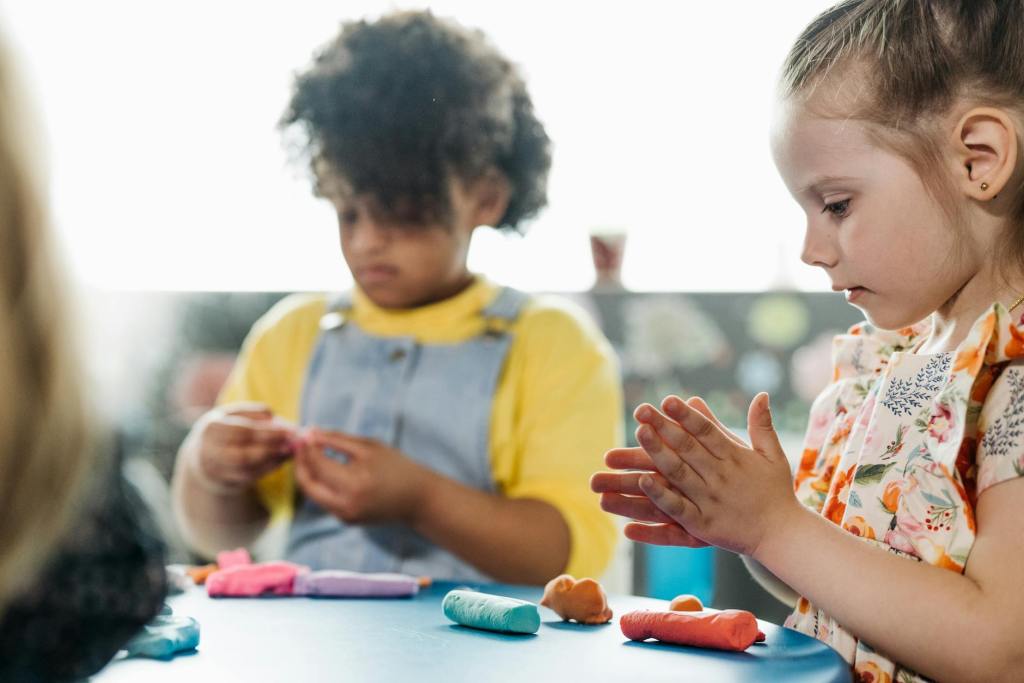
In Early Years settings, safeguarding and Equality, Diversity, and Inclusion (EDI) are often treated as separate topics—but in reality, they are connected. Often, we only make the connection after something has gone badly wrong—and even then, our sector isn’t usually central to the issue. As a result, Early Years professionals can feel further removed from the conversation than they should be. But could we do more to see EDI as part of safeguarding—and safeguarding as part of EDI?
Links Between Safety and Belonging
As Early Years professionals, we know that safeguarding children and families is a priority—but how does that connect with creating an anti-bias, inclusive physical and emotional environment where all children and families feel seen, heard, and valued?
Let’s start with belonging. Safety and belonging go hand in hand. Children thrive in settings where they feel they belong—where they are represented in the environment, where there are strong links between the setting and their home life, and where adults are attuned to their individual needs enough to hear what they say (and don’t say!). These things aren’t just about supporting learning and development—they act as protective factors. When they’re missing, the risk of harm going unnoticed increases.
Families, too, are more likely to reach out for help—or feel safe enough to receive it—if they feel that sense of belonging. Without it, low-level concerns can go unspoken and unaddressed, escalating over time.
Barriers for Families and Practitioners
While barriers to building strong relationships with children and families aren’t exclusive to minoritised groups, we do need to recognise how intersectionality can add extra layers of complexity. Race, culture, language, class—all these can create barriers if we’re not mindful and intentional about breaking them down. And crucially, when those barriers relate to race or culture, it’s not just a partnership issue—it becomes an issue of equity.
The Impact of Bias
We’ve heard a lot in recent years about the importance of being aware of our own bias. But what does bias look like when it comes to safeguarding?
An ongoing example for me is safeguarding training. I’ve sat in training many times where, when it came to images of bruising, only white skin was shown. What message does that send? That we only need to think about bruising on white children? It’s a subtle but powerful example of bias being embedded into professional practice. It also feeds into people’s existing unconscious biases, allowing them to breed. If someone walks into that training with a bias toward white children—or unaware that different skin tones need understanding—this training reinforces that, instead of challenging it.
This type of bias has real consequences. I once spoke to an experienced professional who admitted she lacked confidence spotting bruises on “skin the same colour as yours” (pointing to my dark brown skin). It was positive that she asked for advice—but also worrying that neither her training nor her team’s had ever included guidance on identifying bruises on melanated skin and this hadn’t been followed up. This wasn’t just a training gap—it was a safeguarding inequality.
When Culture Becomes a Shield for Harm
The conversation got even more concerning when she disclosed the reason for her enquiry; She was aware of a parent using smacking as a form of discipline and had even once witnessed it—but felt unsure about raising it unless there was visible bruising, as her understanding was “smacking is normal in their culture and you are allowed if you don’t leave a mark.”
We need to be clear: physical punishment is a safeguarding concern—not a cultural practice. While the Children Act 1989 still allows for “reasonable chastisement,” Working Together to Safeguard Children is clear: physical punishment puts children at risk, and practitioners must act.
In this case, it felt like the professional was minimising harm—potentially responding differently feeling less concern and empathy than she might if the child was from the same culture as her. And this isn’t an isolated situation—or one that’s only about bruising.
The Child Safeguarding Practice Review Panel (CSPRP, 2023) captured this:
“Professionals can make assumptions about parenting and risk based on cultural or class-based stereotypes, which can contribute to minimising or misreading risk.”
(CSPRP, 2023, p.15)
I also consider the motivation to understand how to identify bruising when hearing that smacking is involved an issue—this motivation is reactive rather than proactive. We should want to be informed so that we notice a bruise without needing a disclosure first. It is our responsibility to be alert at all times. We don’t always have the privilege of witnessing something or hearing a disclosure.
So here we are dealing with both ignorance and fear—a lethal and unfortunately common combination. The ignorance is: ‘we don’t know what we don’t know—and too often, we don’t seek to until we feel we have to’ (even if it’s too late for some children). The fear is—being labelled judgmental or racist. But if we allow that discomfort to silence us, we risk failing to act. And that has consequences.
What Happened to Victoria Climbié—and Have we Really Learned?
Victoria Climbié’s death was over 25 years ago—but her story remains one of the most defining and tragic safeguarding failures in the UK.
Victoria was just 8 years old when she died after months of horrific abuse from her great-aunt and her partner. Although she had been seen by a number of professionals—none took decisive action. Why? Because they made assumptions.
One professional is said to have described interpreting Victoria’s quietness as a “sign of cultural respect,” not fear. Another accepted explanations for her injuries because she believed harsh discipline was “normal” in African families. These biases meant crucial safeguarding warnings were missed.
The public inquiry that followed led to changes in legislation, including the Children Act 2004 and the foundations of Every Child Matters. But the big question still lingers: have we changed enough?
Cultural Competence Prevents Misdiagnosis of Risk
Victoria’s case is a powerful example of why cultural competence matters. Despite being historical, reviews today are identifying similar issues.
Cultural competence isn’t about knowing every culture—it’s about being able to listen without assumption, ask thoughtful questions, and recognise when cultural explanations are being used to minimise risk.
When practitioners misunderstand cultural norms, they may underreact like in the examples discussed above—but there’s also a risk that they might overreact (viewing parenting as harmful because it’s unfamiliar). Both are dangerous. True cultural competence gives us the tools to ask: Is this parenting choice safe, or is it placing the child at risk? rather than does this fit what I’m used to?
This also applies to how we work with families from different communities. If a family declines support or resists services, are we exploring why with cultural humility—or writing them off as “hard to reach”? Are we looking at the full picture of the child’s experience, or being distracted by surface-level assumptions?
Being culturally competent helps prevent risk being missed nor misinterpreted. It brings us back to what safeguarding is all about: protecting every child through the lens of their lived experience asking not just What do I know about this child’s needs? but also “What could I possibly be missing?”
How This Links to Our Statutory Duties
If we look closely at key guidance and legislation, the expectation is clear:
✅ EYFS Statutory Framework (2024)
Requires staff to understand and respond to “signs of possible abuse and neglect” (3.6).
➡️ If staff don’t know how bruising looks on all shades of skin, or allow culture to create barriers to identifying safeguarding issues, is this requirement met?
✅ Working Together to Safeguard Children (2023)
Stresses the need for professionals to be curious, competent, and alert to signs of abuse and neglect, especially in children who may be marginalised or face additional barriers to being heard.
➡️ That means recognising signs of harm in all children—including how these might present differently depending on the child’s background and skin tone.
✅ Equality Act (2010)
Requires settings to eliminate discrimination, advance equality of opportunity, and foster good relations between people of different backgrounds.
➡️ If safeguarding materials or training do not reflect racial diversity—for example, by only showing bruising on white skin—this could amount to indirect discrimination.
So, What Can We Do?
- Challenge training providers – If using a provider that doesn’t include different skin tones Challenge them – You might not be able to influence which provider you use, but you can give feedback. Let them know you noticed the lack of representation and why it matters.
- Challenge more!-At the time of writing, a dedicated guide on identifying bruising in Black and Brown children is not widely available. However, I encourage you to explore parallel sources, (for example Bruises on dark skin: Symptoms and treatment provides useful transferable information), seek input from health colleagues, and raise this gap with safeguarding boards. We can’t wait for the perfect resource to reflect and act.
These conversations contribute to a wider impact. When more of us speak up, the sector is more likely to change and benefits children.
- Create safe spaces for reflection – Encourage open team discussion around the links between culture, values, and safeguarding. Some staff may never have made the link and would benefit from being introduced to this concept.
- Challenge the “cultural norm” narrative – Harm is harm. Support staff to distinguish between respectful cultural understanding and harmful safeguarding hesitation by exploring scenarios together. Real-life case reviews, such as Victoria Climbié’s, can be powerful tools for reflection—but always be mindful of staff wellbeing when discussing sensitive topics.
- Review your safeguarding supervision questions – Make space for “Are we making assumptions?” or “Would this concern be responded to the same way for another child?”
- Be intentional – Check that each staff member is confident identifying bruises on different skin tones. If they are not, use the suggested strategies to build confidence.
- Teach cultural humility—not just cultural awareness – Cultural humility means staying open, asking questions, and recognising that you don’t have all the answers. It’s about being respectful and curious—not assuming but seeking to understand.
Underpinning this is the wider work around EDI. It’s not a bolt-on—it should be woven through everything. Your inclusive pedagogy and your commitment to being a genuinely reflective setting—that’s what gives you the foundation to safeguard all children well.
References
- Statutory Framework for the EYFS (2024)
- Working Together to Safeguard Children ( 2023)
- The Equality Act (2010)
- I Wanted Them to Notice – National Review (Child Safeguarding Practice Review Panel, 2023)
- Victoria Climbié Inquiry Report (Lord Laming, 2003)
 EDI Spotlight
Leave a comment